Adopting the Dental Therapist Model into General Dental Practice

By empowering a dental therapist and upskilling his team, Andrew has rebuilt his practice into a streamlined, prevention‑driven powerhouse - and reclaimed his time in the process.

wave-md

May 2026


Starting a new practice model

Having started my own NHS squat practice back in 1998, dentists began by completing all treatments themselves, including the dental hygiene side. This quickly became quite time consuming - so soon after establishing the practice, we engaged the services of a dental hygienist.


This greatly benefited the practice - by not only providing patients with more comprehensive periodontal care and advice, but also giving the dentists more free time for restoration and treatment provision, as well as increasing patient numbers through accepting new patients. The only disadvantage at this stage was the NHS contract funding, which caused some financial difficulties.


Following the introduction of the new NHS dental contract in 2006, we continued using the same model until 2009, when that contract expired. It became evident then, that with the new contract provision, funding was inadequate to continue and improve the level of service we strived for.


Transitioning to Denplan


We therefore opted to convert to Denplan. Although extremely daunting at the time, which felt like a leap into the unknown, it was by far the best decision for ongoing patient care and practice development. With improved funding, we were able to increase dental hygiene provision and therefore enhance our preventive care offering.

Denplan quotation mark

By far the best decision for ongoing patient care and practice development.

A decade of preventative success

This had a highly positive benefit to our patients and over the following decade, we established a very stable patient base, needing little intervention. This was borne out when Covid-19 arrived. In our experience, we found that not one of our patient’s needed assistance during the enforced “lock-down”. We were able to open as soon as it was “legal” to do so and had caught up on patients care within just a few weeks.


This model of prevention and utilising the dental hygienist was proving successful, but as a dentist providing mainly examinations and simple repairs day-to-day on a large stable patient base, I was looking for an alternative approach - building on the dental hygiene and preventative model which had worked so well. This coincided with Direct Access being introduced for Dental Therapists in 2022. I decided to follow the Dental Therapist model in General Practice.

The scope of practice for a Dental Therapist has evolved over time and embracing this evolution was key to implementing the new model. By utilising the full scope of practice, the Dental Therapist can provide the following services:

  • list item icon

    Carrying out clinical examinations and developing treatment plans (within their competence)

  • list item icon

    Prescribing and taking radiographs

  • list item icon

    Performing direct restorations on both primary and permanent teeth

  • list item icon

    Carrying out extractions of primary teeth and performing pulpotomies on primary teeth

  • list item icon

    Providing preventive oral care, including scaling and polishing and root surface debridement

  • list item icon

    Administering local anaesthetic (infiltration and IDB)

  • list item icon

    Supplying and administering certain prescription-only medicines

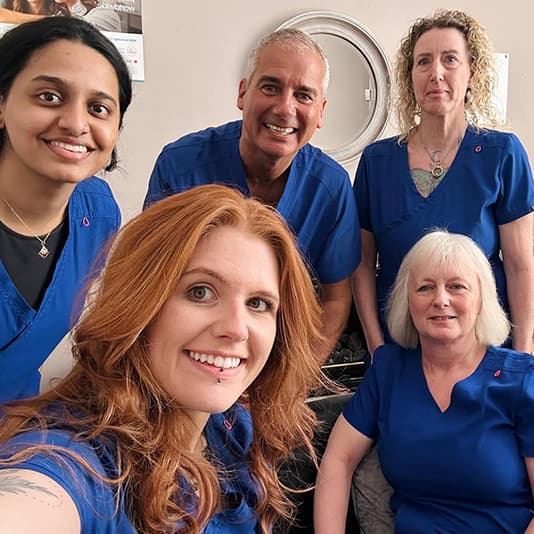
Oakhouse Dental Practice Team in blue scrubs pose for a group photo.

Empowering the dental nurse team

In addition to introducing the Dental Therapist to the practice model, I was keen to use our Dental Nurses to their full potential. Fortunately, my nurse was keen to develop her skill set and, with practice support, achieved her Oral Hygiene, Radiography and Impression taking qualifications.


This enabled our Dental Nurse to take on more in‑depth oral hygiene cases and periodontal radiographs previously done by our therapist, freeing up her time to provide the additional treatments. Our dental nurse had the additional time to allocate to these tasks, as my surgery time was reduced.


Preparing patients for change

So, the plan was in place, but the next hurdle was educating our large patient base about the new changes. I didn’t feel an “overnight change” would be very well accepted by patients, so instead I opted to inform and educate patients through effective communication (via emails, website and in practice) of the upcoming changes to the practice dynamics.


Patients were informed, over time, of the scope of practice of both the dental therapist and our enhanced qualified nurse. This was carried out over around 12 weeks prior to the implementation. By focusing on the capabilities of the team, the improved streamlining for patients, as well as the enhanced access to appointments, the changes were very well received – but communication is key! Patients are advised that they can see the dentist at any point should they wish, but this has only been utilised by patients in a small minority of cases. Around 90% of our patients were happy to see our Dental Therapist for their routine care.

Denplan quotation mark

Communication is key. Around 90% of our patients were happy to see our Dental Therapist for routine care.

A new clinical workflow

Following the implementation of the changes, my diary as a dentist became very light, as routine examinations and simple restorations were now performed by our Dental Therapist, so I had more time on my hands. I decided to provide tooth alignment to further enhance our practice services.


Our Dental Therapist is happy to provide most routine treatments, but with the option to refer patients to me, if needed, for any more complex cases. So, my work pattern has changed.

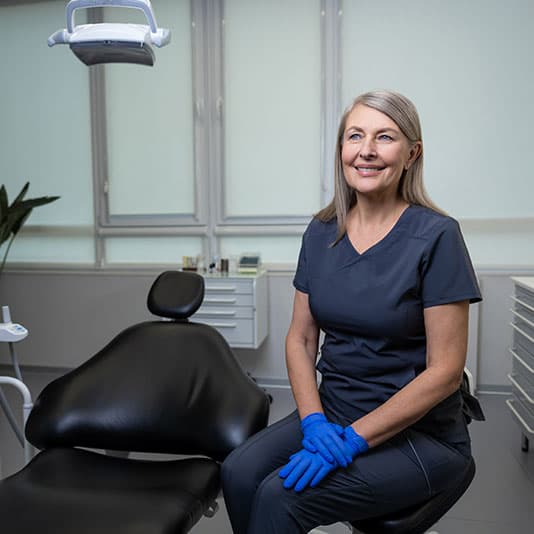
Smiling lady dentist in practice
Denplan quotation mark

I now focus on more complex restorations, tooth alignment, crown and bridgework, cosmetic dentistry, and dentures, with just a "a sprinkling" of examinations - but I am still needed in surgery for less time than previously, enabling me to increase our patient base and general dental provision by around 30% so far.

Expanding into tooth alignment

For my tooth alignment cases, the patients are offered a free initial consultation whereby my dental nurse will take the required records (presenting complaint – desired change, photos and mouth scan) and upload them to the portal. I then review this and see the patient for a follow‑up face‑to‑face appointment and run through the procedure and likely outcome. Then I provide the composite bonding and issue the aligners, but patient time involvement is reduced by utilising my dental nurse for the provisional records.


A fulfilling late‑career model

So, as I am approaching the “twilight years” of my career, I can focus on the more complex and interesting issues that present in general practice, have more time away from the practice and enjoy an enhanced work-life balance. The practice is more streamlined by utilising the skill set of my staff to optimise treatment provision to patients. The staff are happy as they are more involved in patient care, the patients are happy as their treatment is more streamlined and they can access me, the dentist, much more readily than previously as my time is more available. I am happier as I can focus on what I consider to be the more interesting cases as well as more time away from the surgery to spend with family.

Ready to take the first step?

Book a free, no obligation consultation with one of our experts.